

About Nairobi
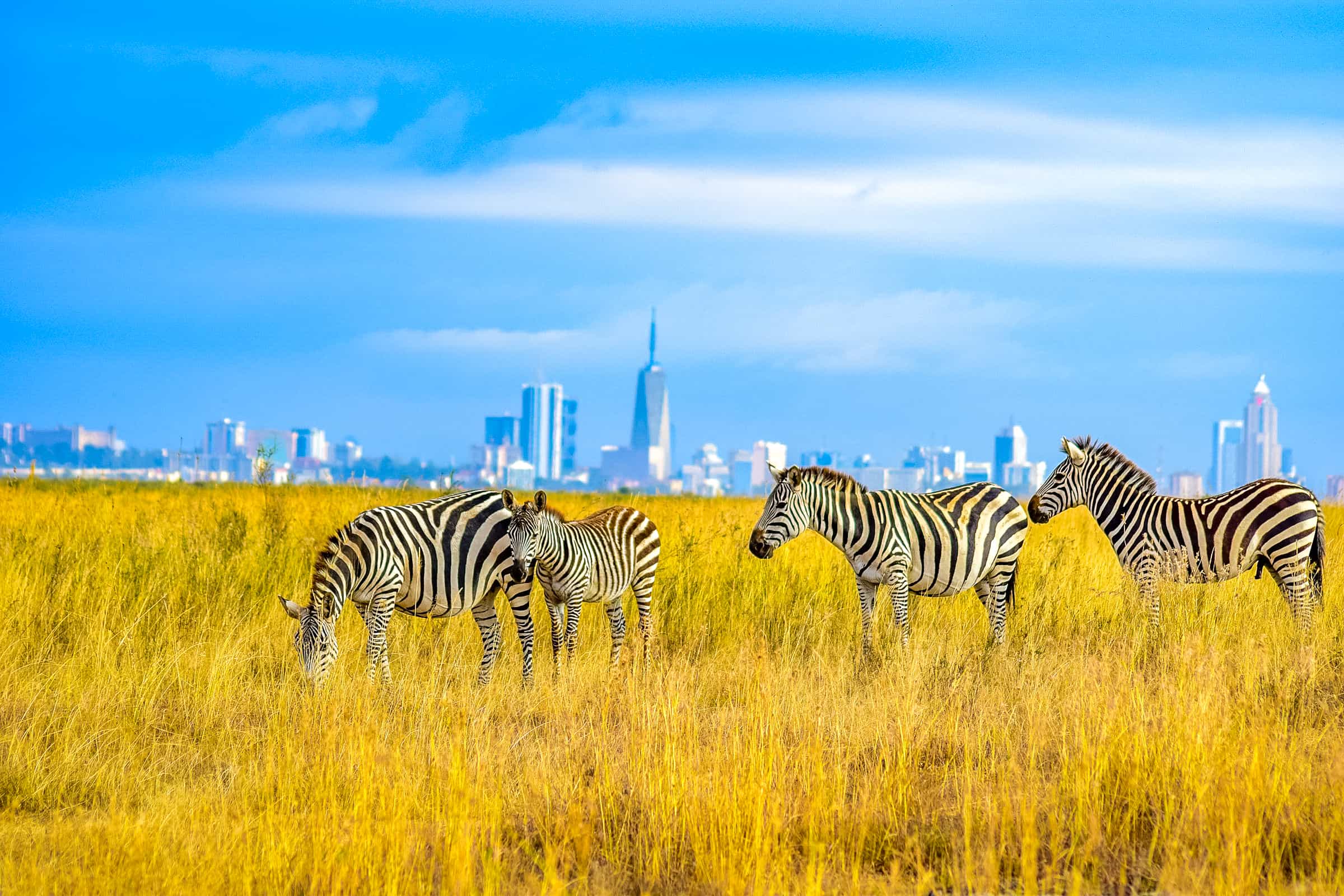
Nairobi is the capital and largest city of Kenya, serving as the country’s political, economic, and cultural centre. Often referred to as the “Green City in the Sun,” Nairobi is known for its rare combination of urban development and natural environment — a place where modern city life exists alongside open landscapes and wildlife.
As one of the most influential cities in Africa, Nairobi functions as a regional hub for business, diplomacy, and travel. It is also widely recognised as a gateway to East Africa, connecting visitors to the wider region while offering a distinct identity of its own.
The City
Exploring Nairobi
Where Exactly Is Nairobi?
Nairobi is located in south-central Kenya, positioned between the coastal city of Mombasa and inland cities such as Kampala. It lies just east of the Great Rift Valley and sits at an elevation of approximately 1,795 metres above sea level.
The city covers an area of about 684 square kilometres and is surrounded by key geographical landmarks:
- The Ngong Hills to the west
- Mount Kenya to the north
- Mount Kilimanjaro to the southeast (visible on clear days from certain areas)
Flowing through the city is the Nairobi River, along with its tributaries, forming part of the area’s original natural landscape.
The Origin of the Name “Nairobi”
The name Nairobi is derived from the Maasai phrase “Enkare Nairobi,” meaning “cool waters.” This refers to the streams and water sources that once defined the area before urban development.
The name reflects Nairobi’s environmental origins — a landscape shaped by water, wetlands, and open plains — long before it became a city.
The Early Formation of Nairobi
Before its development, the area that is now Nairobi was largely open land used by the Maasai and Kikuyu communities.
In 1899, during the construction of the Uganda Railway, the British colonial administration selected the site as a rail depot, supply station, and settlement point for workers. Its central location and access to water made it a practical choice.
By 1900, the settlement had been rebuilt following a plague outbreak. In 1907, Nairobi replaced Mombasa as the capital of British East Africa, marking its transition from a temporary railway outpost into a growing administrative and commercial centre.
Nairobi Through History
Nairobi continued to grow during the colonial period, attracting settlers, traders, and workers. In 1919, it was officially declared a municipality.
The city also became a centre of political activity during the struggle for independence. In 1922, protests led by Harry Thuku marked one of the early organised movements against colonial rule, highlighting Nairobi’s role in shaping national history.
Following years of political pressure and resistance movements, including the Mau Mau uprising, Kenya gained independence in 1963, and Nairobi became the capital of the new republic.

By bandabarn, CC BY 2.0, https://commons.wikimedia.org/w/index.php?curid=35732143
Climate, Landscape, and Why Nairobi Feels the Way It Does
Nairobi’s elevation gives it a relatively mild climate compared to many other African cities.
The city typically experiences:
- Warm, sunny days with temperatures between 20°C and 30°C
- Cooler periods, particularly in June and July, where temperatures can drop to around 9°C
- Moderate rainfall, with occasional drizzles during transitional seasons
This climate supports green spaces, tree-lined streets, and open landscapes, contributing to the city’s reputation as a balanced urban environment.
What Is Nairobi Known For Today?
Today, Nairobi is known for its unique position as both a modern city and a wildlife destination.
Key characteristics include:
- A major business and financial hub in Africa
- A centre for international organisations, including the United Nations Office at Nairobi
- A diverse urban culture with strong influences from across Kenya and beyond
- Proximity to wildlife, including the globally unique Nairobi National Park
This combination makes Nairobi one of the few cities in the world where wildlife and urban life coexist within the same space.

What Is Nairobi Known For Today?
Nairobi as an Economic and Regional Hub
Nairobi plays a central role in Kenya’s economy and the wider East African region.
The city hosts:
- The Nairobi Securities Exchange, one of Africa’s leading stock exchanges
- Regional headquarters for multinational companies such as Google, Coca-Cola, and General Electric
- Key industries including manufacturing, technology, finance, and agriculture
In addition, Nairobi serves as a major transport hub, linking air, rail, and road networks across Kenya and neighbouring countries.
Tourism and the Identity of Nairobi
Tourism in Nairobi is shaped by its dual identity.
On one hand, it is a working city — fast-moving, commercial, and constantly evolving. On the other, it offers access to nature, history, and culture within a relatively compact space.
Experiences in Nairobi often include:
- Wildlife encounters within and around the city
- Cultural and historical sites
- Urban exploration, markets, and local cuisine
- Nightlife and contemporary creative spaces
Rather than being defined by a single attraction, Nairobi is experienced through contrast — movement and stillness, structure and openness.
Practical Considerations for Visitors
Visa Requirements
Most visitors to Kenya require a visa, unless they are from visa-exempt countries. A valid passport (minimum six months validity) is required for entry.
When to Visit
Nairobi’s climate is moderate year-round, making it a destination that can be visited at any time. Seasonal variations are generally mild.
Transport
Nairobi is served by Jomo Kenyatta International Airport for international travel and Wilson Airport for domestic flights.
The city also connects to other regions via road and rail, including the Standard Gauge Railway.
Within the city, transport options include taxis, ride-hailing services, buses, and matatus.
Safety
Like many major cities, Nairobi requires awareness and basic precautions, particularly at night or in unfamiliar areas. Visitors are advised to stay informed, avoid displaying valuables, and plan movements carefully.
The Emergence of Nairobi as a Destination
While Nairobi has long been known as a gateway to safari destinations, it has increasingly become a destination in its own right.
As travel patterns evolve, more visitors are choosing to spend time within the city to experience:
- Its cultural diversity
- Its evolving creative scene
- Its balance between urban life and nature
This shift reflects a broader understanding of Nairobi — not just as a starting point, but as a place with its own depth and character.
Our Role in Nairobi
Visit Nairobi exists to:
- Curate meaningful and well-structured experiences
- Provide clear, reliable information
- Help visitors understand the city beyond surface-level tourism
- Support responsible and informed exploration
We focus on presenting Nairobi as it is — a complex, evolving city shaped by history, geography, and the people who move through it.